
When you walk onto a job site today, you’ll hear the whirr of saws, the buzz of drills, and the occasional colorful language when something goes sideways. But there’s an ongoing debate among contractors, electricians, plumbers, and industrial buyers that never seems to go away: should you invest in cordless or corded power tools?
Sure, both have their place in the toolbox, but when you’re thinking about return on investment (ROI)—what’s giving you the most bang for your buck—there are some serious considerations.
Let’s break this down so you can make an informed buying decision that keeps your crew productive, your costs low, and your profits high.
What Do We Mean by ROI in Power Tools?
Before we start comparing, let’s define ROI in the context of industrial power tools:
-
Upfront cost: purchase price
-
Longevity: how long before it needs repair or replacement
-
Productivity: how much work it helps you or your crew accomplish per hour
-
Downtime: how often it’s out of commission for charging, repair, or tangled cords
-
Adaptability: can it be used across job types and locations?
Simply put, ROI is about how much value you’re squeezing out of every dollar you spend on tools.
Cordless Power Tools: Freedom or Frustration?
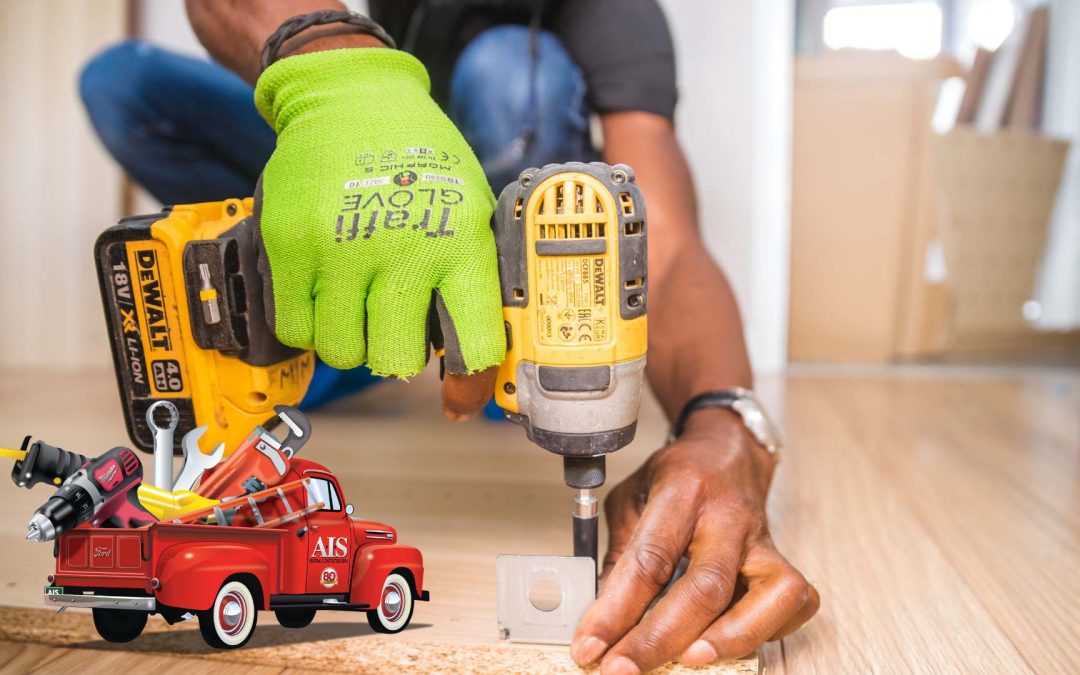
Cordless power tools—from drills to impact drivers to rotary hammers—are the rockstars of modern construction sites. Powered by lithium-ion batteries, they’ve come a long way since the underwhelming nickel-cadmium models of the 1990s.
Keywords: cordless power tools, lithium-ion batteries, rechargeable tools, construction job site productivity, cordless drill ROI
Advantages of Cordless Tools
✅ Portability:
With no cords, your crew can work anywhere—rooftops, crawlspaces, basements—without dragging around a heavy extension cable.
✅ Speed of setup:
No need to hunt for an outlet or run 200 feet of orange cord just to drive a few screws.
✅ Advances in battery tech:
Modern brushless motors and high-capacity batteries deliver almost corded-level power, and fast-charging stations keep downtime minimal.
✅ Safety bonus:
Without cords snaking across the site, there’s less risk of tripping, tangling, or accidentally cutting the line mid-task (you know someone on your crew has done it).
Drawbacks of Cordless Tools
❌ Battery cost:
Batteries aren’t cheap, and they degrade over time. Replacing a few batteries can cost as much as buying a whole new corded tool.
❌ Limited runtime:
Even with improved capacity, you still face the dreaded battery swap shuffle—especially on long, high-demand jobs like drilling into concrete or grinding metal.
❌ Weight:
Cordless models often weigh more due to onboard batteries, leading to worker fatigue, especially during overhead or all-day tasks.
Corded Power Tools: Old-School Reliability
Corded power tools are the workhorses that have powered industrial and construction sites for decades. They plug into the wall and deliver steady, uninterrupted power.
Keywords: corded power tools, continuous power tools, electric drill, construction equipment ROI, heavy-duty power tools
Advantages of Corded Tools
✅ Unlimited runtime:
As long as you’ve got power, you’re good to go. No dead batteries, no waiting on a charger, no juggling packs between tools.
✅ Higher torque and power:
For heavy-duty applications—think hammer drills, grinders, saws—corded tools usually outperform cordless, especially on prolonged or intensive tasks.
✅ Lower upfront cost:
Corded tools are generally cheaper than their cordless equivalents, especially when you factor in the cost of batteries and chargers.
✅ Lighter weight:
Without a battery pack, corded tools are often lighter, reducing strain on workers during repetitive tasks.
Drawbacks of Corded Tools
❌ Limited mobility:
You’re stuck near a power source or hauling around extension cords, which can be a pain on large or remote job sites.
❌ Tripping hazards:
Cords can clutter up the workspace, creating risks for slips, trips, and falls—not to mention the occasional cord-cutting mishap.
❌ Setup time:
Plugging in, securing cords, and managing cable slack takes time, especially when moving between work areas.
The ROI Showdown: Cordless vs. Corded
Let’s compare cordless and corded tools across key ROI factors:
| Factor | Cordless Tools | Corded Tools |
|---|---|---|
| Upfront Cost | Higher (batteries, chargers, replacements) | Lower initial purchase cost |
| Longevity | Batteries wear out; tools improve fast | Long-lasting, fewer updates needed |
| Productivity | Fast, flexible, mobile | Steady, continuous power |
| Downtime | Dependent on battery charging cycles | Dependent on power access and cord setup |
| Adaptability | Best for mobile or off-grid work | Best for shop or heavy-duty site work |
Keywords sprinkled in: tool investment, power tool maintenance, heavy-duty drilling, mobile construction equipment, jobsite efficiency
When Cordless Wins ROI
Cordless tools shine when:
-
You’re doing service work or repairs in tight or remote spaces.
-
Your crew needs to move quickly between job locations.
-
You want to avoid the hassle of power outlets and cords altogether.
-
Your team values lightweight portability over raw power.
Example: A plumber running quick repairs across several houses in a day? Cordless tools will save time and headaches.
When Corded Wins ROI
Corded tools dominate when:
-
You’re doing heavy-duty work like grinding, cutting, or drilling into masonry.
-
You need long, uninterrupted runtime without battery limitations.
-
You’re working in a shop or controlled environment with easy access to power.
-
Your crew needs consistent power output without the battery drop-off.
Example: A fabricator cutting steel plates all day? A corded grinder or saw will power through without stopping.
Hybrid Crew Strategy: Best of Both Worlds
Many successful contractors adopt a hybrid approach:
-
Cordless tools for fast, mobile, lightweight jobs.
-
Corded tools for power-hungry, stationary tasks.
Think of it like this: your cordless impact driver is the nimble sprinter, while your corded table saw is the marathoner with endless fuel.
Other ROI Tips for Smart Tool Buying
-
Invest in tool brands with cross-compatible batteries (e.g., Milwaukee M18, DeWalt 20V MAX, Makita LXT).
-
Track tool usage and maintenance—a tool sitting unused isn’t generating ROI.
-
Rotate tools properly to balance wear-and-tear across your fleet.
-
Train your crew: A well-trained worker gets more value from every tool, cordless or corded.
And of course, buy from a trusted supplier (hey, that’s us!) who can advise you on the right setup for your crew’s needs.
The Humor Drill: Why Contractors Love Cordless (and Corded)
Let’s face it: half the fun of buying tools is showing them off to the crew.
-
Cordless tool fans: “Look, no cords! I’m freeee!”
-
Corded tool fans: “Yeah, but can your toy keep up when we’re cutting all day?”
Either way, there’s always that one guy on the team who leaves batteries charging overnight… and another who trips over the cord and blames the apprentice.
Final Verdict
So, which delivers better ROI for your crew—cordless or corded?
👉 It depends on your work style, project demands, and tool strategy.
For mobility and flexibility, cordless wins.
For raw power and runtime, corded takes it.
But the smartest crews blend both for maximum productivity and profitability.
At the end of the day, the best tool is the one that makes you money, saves you time, and keeps your workers safe and happy.
Looking to upgrade your tool fleet?
Call us at 303-355-2391


